March Meeting

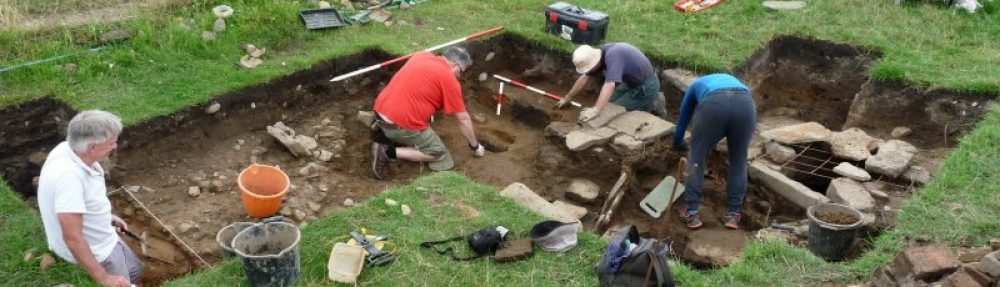
This month we had our old friend Ian Miller form Oxford Archaeology North. Last year his company were commissioned to carry out an investigation of a former industrial site at Tottington. It started as a small investigation ahead of a planned removal of a culvert to improve the flow of the Kirklees Brook. This developed into a large scale area excavation involving various volunteer groups from around the district. It revealed quite a lot of evidence of the dyeing and printing operations that was once carried out there in the early 19th century. Ian as usual always gave a great talk on a subject he’s really passionate about.

February Meeting

Wednesday 6th February. This month it’s our AGM but after the usual formalities, Eric Walter (our Chairman) will be giving a presentation explaining the future research projects we are planning for the Society. This year we plan to initiate these projects so that  we can hopefully involve members who are not able to do excavation work. The research will involve visiting libraries, visiting sites, photographing and recording the features we see. The Projects include a Town Centre Survey, a Routeway Furniture Survey, a Graveyards Project and a Historic Building Survey. We will also be carrying on with our survey of the Pingot site which was reviewed in last month’s Newsletter (No. 159).

December Meeting

Wednesday 5th December. This month we have our old friend John Johnson from the Horus Egyptology Society who will be telling us about the latest developments on the West Bank at Luxor and particularly the excavations at the mortuary temple of Amenhotep III. The only evidence for this temple are the two huge statues entitled Colossi of Memnon. It turns out however that this temple  was enormous, even bigger than Karnak itself.  It disappeared quite early on, probably because it was mainly made of mud brick and the constant flooding from the Nile caused it to deteriorate quickly – the rest was robbed by later pharaohs to built their temples and his statues reused changing his name with theirs (even the massive granite statue of Rameses the great in the Ramesseum was probably originally Amenhotep’s). Excavations by German archaeologists over that past 40 years have uncovered more and more remains from this site and are gradually piecing together evidence to show the this pharaoh was probably the greatest builder the New Kingdom and maybe of all time in ancient Egypt. Sounds like a great talk.

Pingot Valley Site Visit

Our attention was drawn to this site last year by Derek Winstanley who now lives in the US. He had noticed on a recent visit that there were remains of the old lime kiln marked on the 6 inch OS map of 1849. I’d looked at the site last year but other commitments at the time meant that it’s only now that perhaps we’re able to spend some time on it (see new ‘Pingot Valley‘ tab for details).

November Meeting

Wednesday 7th November. – This month Norman Redhead, from the new Greater Manchester Archaeological Advisory Services, will be joining us to give us a talk on the Historic Landscape Characterisation project. This nationally commissioned initiative started in 2007 and ran for 4.5 years. It culminated in the production of a huge database which is controlled by a programme called a Graphic Information System. By linking historic, geographic and social records together with maps, both historical and modern, it can be used  to display all kinds of useful information. Norman will be bringing the database with him on his laptop to demonstrate how it can be used. Of particular interest to us will be its use in identifying areas of archaeological sensitivity and how the historic character of these areas can be studied.

Site at Glazebury

On a misty morning Last Sunday Andy Wilock and I visited a site on the edge of Chat Moss near Glazebury. We were invited there by Marlene Nolan of Culcheth History Society who had spotted the site while field walking. It seemed to her to be some kind of defensive earth work lying at a strategic point on the banks of the River Glaze. You may be wondering why she asked us to look at this site so far away from Wigan – but, surprising as it may seem, quite a lot of Chat Moss does lie within the Wigan Metro Borough.
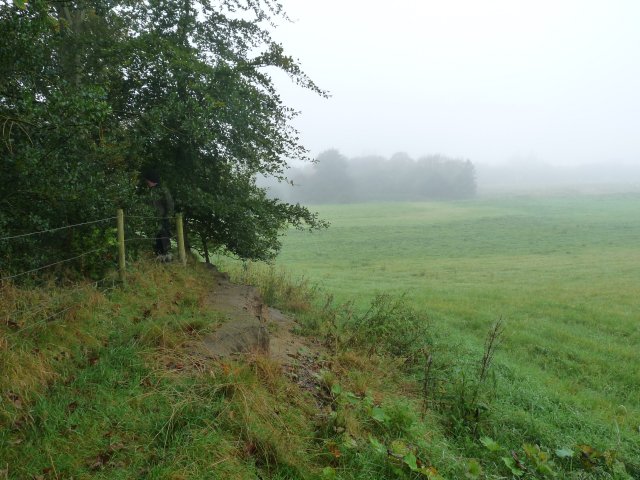
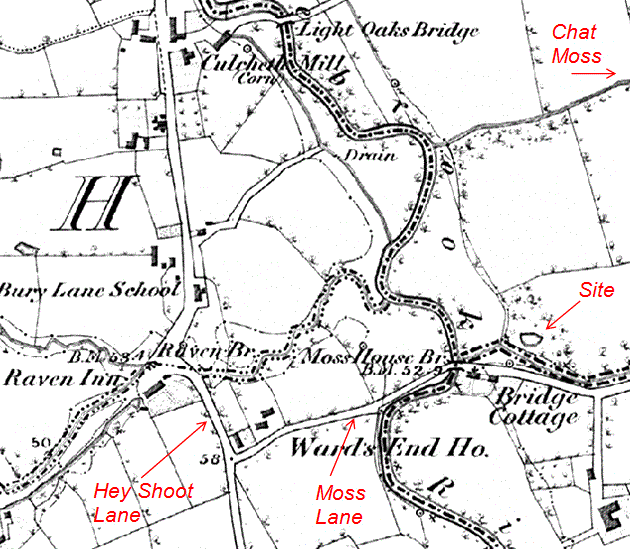
The site is located north of Moss Lane which branches off Hey Shoot Lane about 200m east of the River Glaze near the Raven Pub. It’s surrounded on three sides by a large bank with a ditch on the south side. The interior is flooded up to a point where a cut in the bank allows the water to escape.
Judging from the maturity of the trees we perceive the site must be at least a 200 or 300  years old but a quick check on the 6″ OS map of 1846 gives no indication of its origin. The history of the area suggests a possible Civil War connection as apparently there was a large skirmish in the vicinity.  Another slight possibility is that it could be much older as an Iron Age site had been discovered a few years ago only about one mile south of this one.
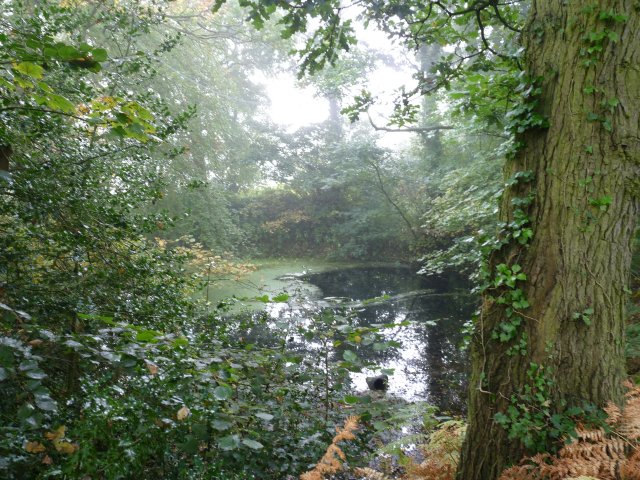
More likely however it’s the product of some pre-Victorian industrial activity such as sand, stone or clay  extraction – a trench across the embankment may give the answer but whether we’d get permission is another thing.
October Meeting

Tuesday 2nd October – note the change of day – a previously booked wedding at our venue has forced us to change from our usual Wednesday. It also means that our long-booked speaker is not now available. There has been a suggestion that we review some of our previous Society trips – even including the ones we made to Angers in Frances in the early 2000’s. We made three visits there in total and there is enough material available for a presentation on this subject alone. There has also been some suggestions about the possibility of making a return visit – a review of these trips may prompt a review of the possibilities.

Rectory Site Visit

Managed to get down to the Rectory this Sunday to carry out necessary maintenance (mainly pumping out the water) and see if we could make some progress on the new features we discovered last time – including something strange lurking at the bottom of the deep trench (if you want to see what we found check out the Rectory Project Archive – Area 1).

September Meeting

Wednesday 5th September – in the Standish Suit at the Brocket Arms (7.30pm as usual).  This month we have Brian Grimsditch who is Senior Archaeologist at the Centre for Applied Archaeology (CfAA) at Salford University. He has been involved in the running of the Dig Greater Manchester project which included the dig at Etherstone Hall in Leigh earlier this year. His talk however will be on something a little different.  Besthorpe is a project that Brian has been involved with over a number year now. Predominantly a Romano-British site, but evidence is starting to emerge of earlier occupation – from Mesolithic to late Iron Age. This takes the form of prehistoric pottery, polished stone axes, metal artefacts and lots of worked flint. I’m sure it will be another fascinating talk from Brian – hope to see you there.