This trip was arranged to see the “Treasure: History Unearthed” exhibition put together by the Museum’s archaeology team to celebrates the work of the Portable Antiques Scheme (PAS). It was also an opportunity to showcase the many finds from antiquarians and others over the years from around the region. Our guide for the day was Vanessa Oakden curator at the Museum who was highly involved in its creation. Despite the Liverpool Half Marathon taking place at the same time, our trip turned out to be a great success and I would like to thank Vanessa on behalf of the Society for making the day a very memorable one.
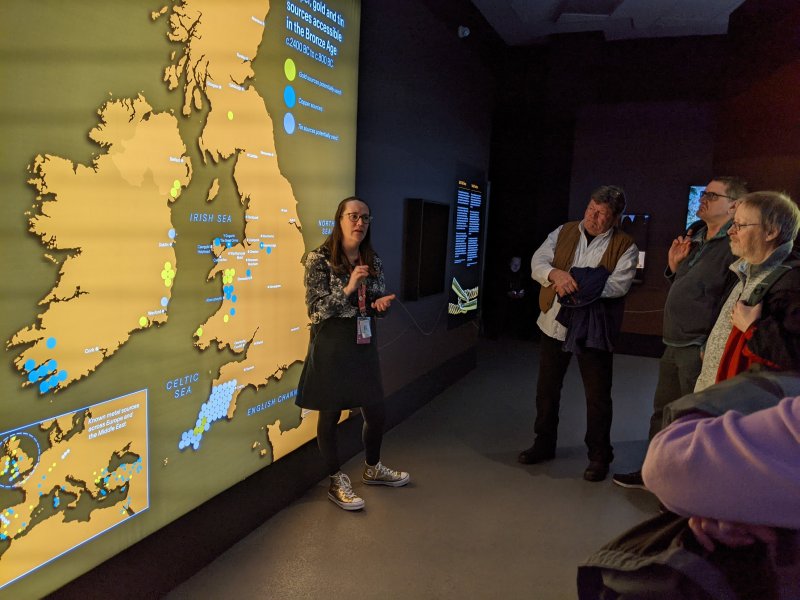
Once we’d all negotiated our way around the runner’s and spectators, Vanessa was able to gather us together for the start of the tour. Many of the items on display are on loan from regional and national institutions including the British Museum and Museum Wales. Vanessa started off by show us some of the amazing finds (brooches, rings etc.) handed in to the PAS over the years, some as old as the Romans, some much more recent. 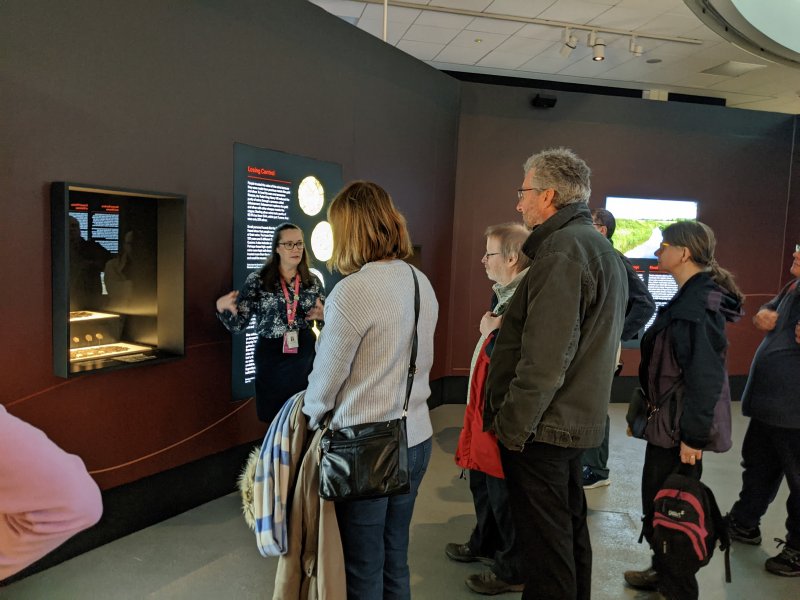 She then went on to explain the sources of the metal the Bronze Age people had available to them, i.e. Gold, Copper and Tin.
  A large diameter Bronze Age gold torc was of particular interest as it was said to have been used to fasten a gate before realising what it was.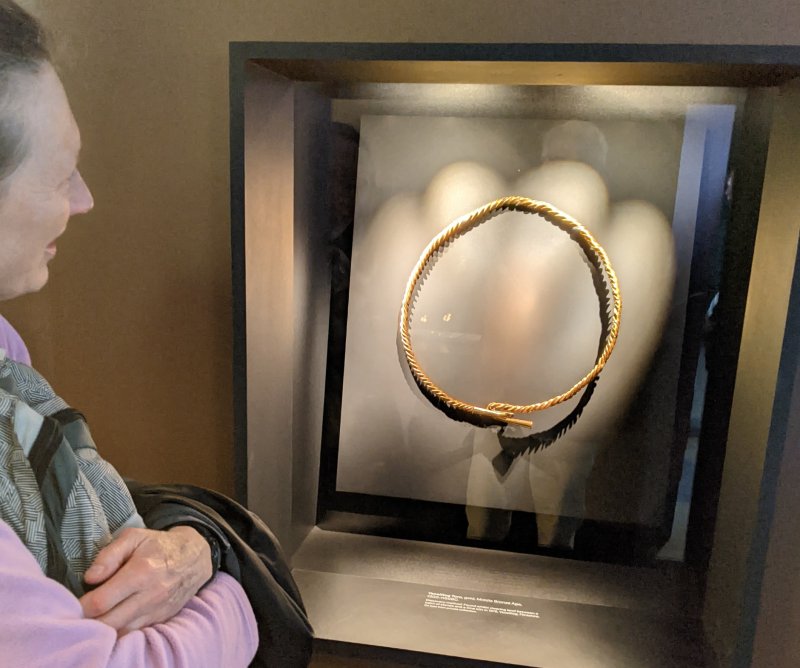
The highlight for me though was the fabulous gold Cape found by workmen in 1833 while quarrying stone near Mold in North Wales. This stunning ceremonial gold artefact also from the Bronze Age was discovered lying crushed in the stone cist of a burial mound, beside the fragmentary remains of a body. At the time its pieces were dispersed and it wasn’t clear what the pieces represented. Only when they were all brought together and the restoration completed that the true form of the artefact could be realised. 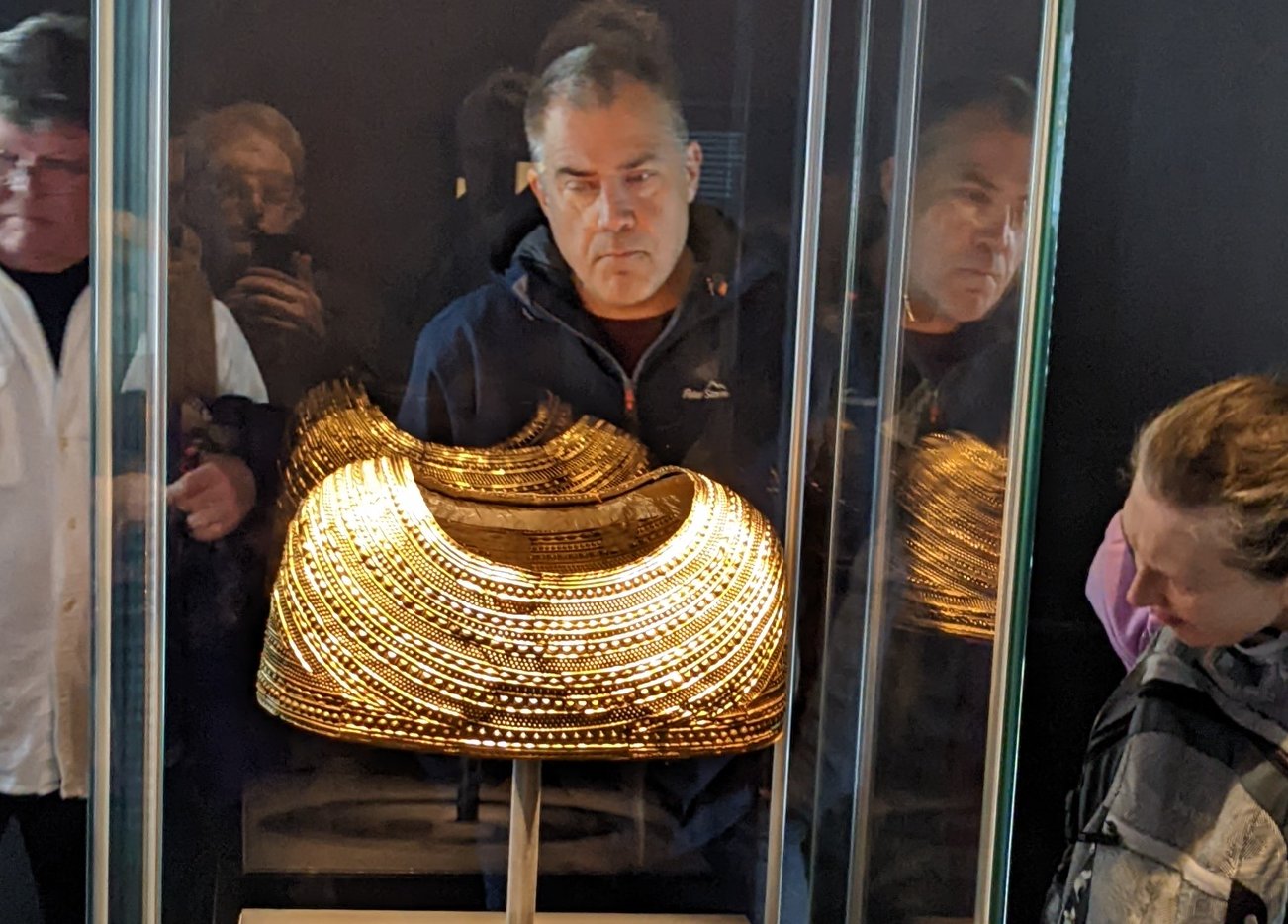
One of the dominant features of the exhibition were the hoards particularly from the Roman period. The Boothsbank Hoard was found by workmen in 1947, the Peover Hoard by a detectorist in 2015 and the Knutsford Hoard by a detectorist in 2012.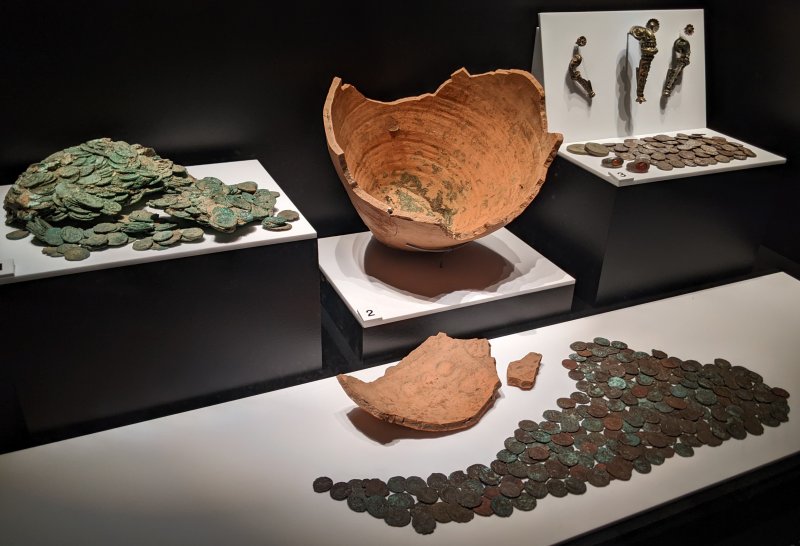
For me one of the most fascinating was the Malpas hoard which was found by detectorists in 2014. Significantly it consists of coins from before the Roman invasion, 28 silver denarii from Emperor Tiberius’ reign and 7 gold British staters from the Dobunni and Corieltauvi tribes. One theory is that they were linked to Caratacus, the British chieftain who fled to the Brigantes after his defeat against the Romans (only to be handed in by Queen Cartimandua). 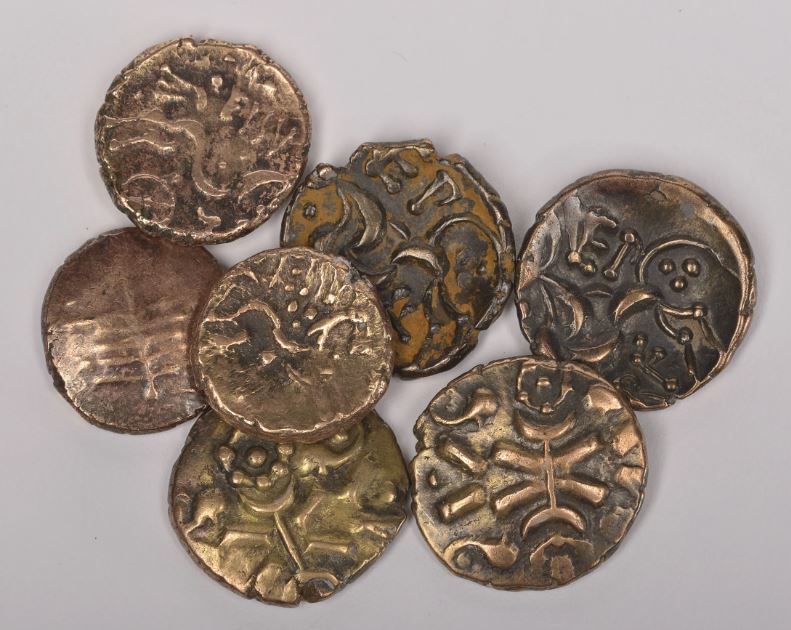
It was also great to see the three famous Viking hoards from around our region on display together i.e. the Cuerdale, Huxley and Silverdale hoards. 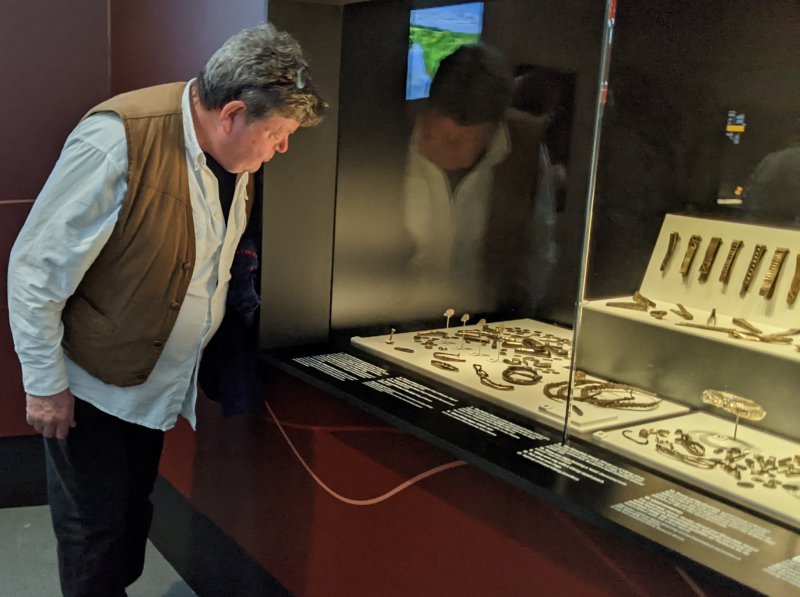 They all consist basically hack silver which was used as bullion but there are some very finely decorated silver arm rings particularly in the Silverdale hoard.
 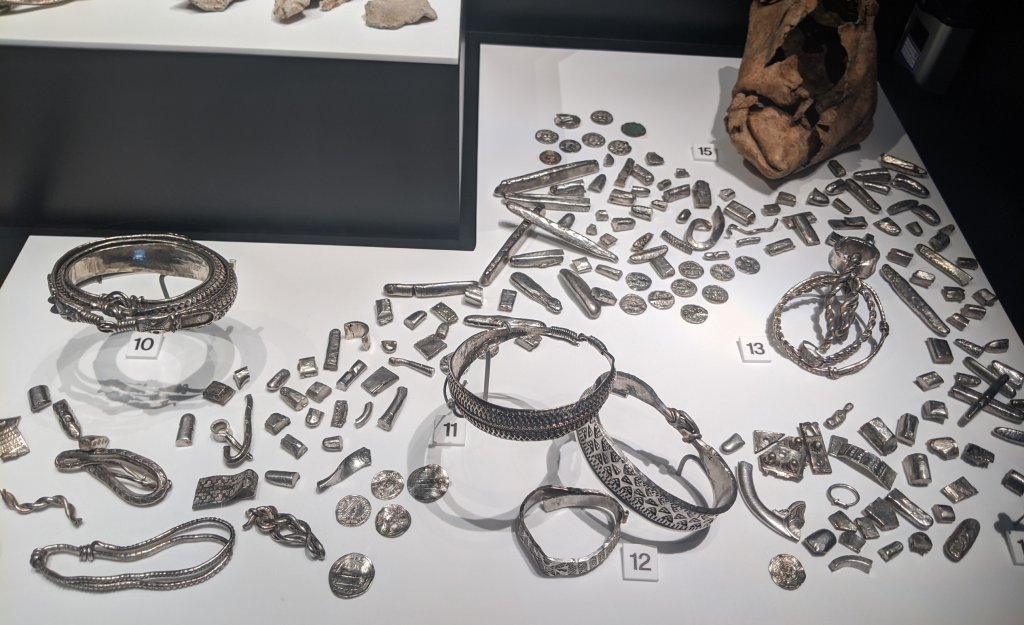 They all seem to relate to the expulsion of the Vikings from Ireland in the early 10th century. To test if there was a connection between them (and other Viking finds from the Region), the Museum commissioned analysis of their composition. This found a general similarity showing a mix of silver from Western European and Islamic sources. In particular the Huxley hoard, as well as an ingot from the Silverdale hoard, revealed the likelihood of they were made from recycled Islamic coins i.e. the dirham. If nothing else, it showed the Vikings had trading routes extending far beyond Europe into the Middle East.
The tour ended with Vanessa explaining the law regarding the reporting finds of under the Treasure Act 1996. Find of potential Treasure, i.e. gold or silver objects, or groups of coins from the same find area which are all at least 300 years old, must be reported within 14 days,. Groups of two or more prehistoric base-metals assemblages and significant historical objects also qualify as Treasure.
We all had a great time on this trip, with all credit going to Vanessa and her team at the Museum.