Sunday 21st August 2011
Great day our last Sunday – in no small part thanks to Phil Cox who shook off the symptoms of a cold to take us round his sites at Bryn Alyn. 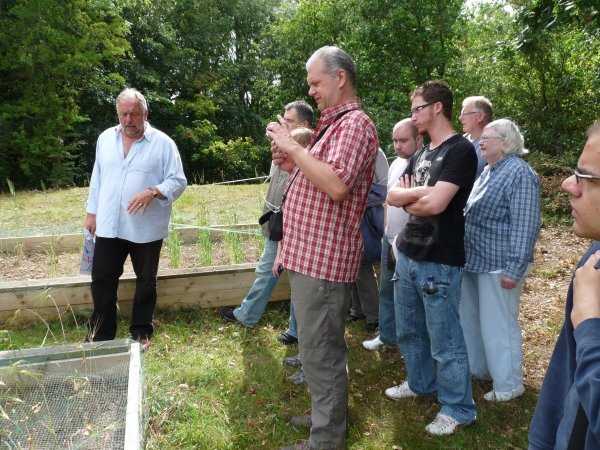

Phil is quite proud of his site projects – in particular his experimental archaeology which include beds of prehistoric cereal, an iron age round house and small pottery kiln. 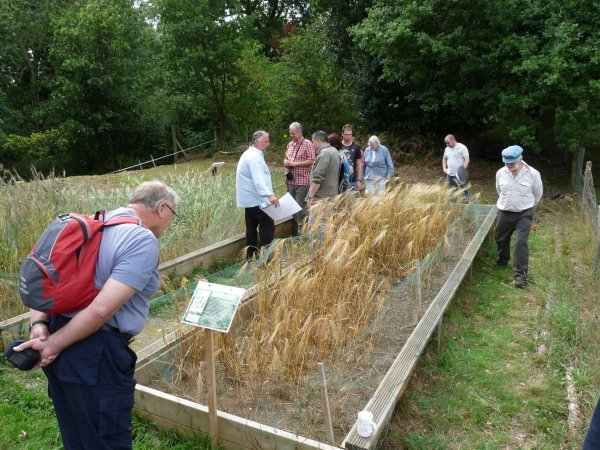

This area also boasts some actual archaeology – although Phil is not sure exactly what it is. There’s a structure dating to the 17th century an a stone lined cut-out in the side of the hill which, to me, looks like a kiln for drying corn. 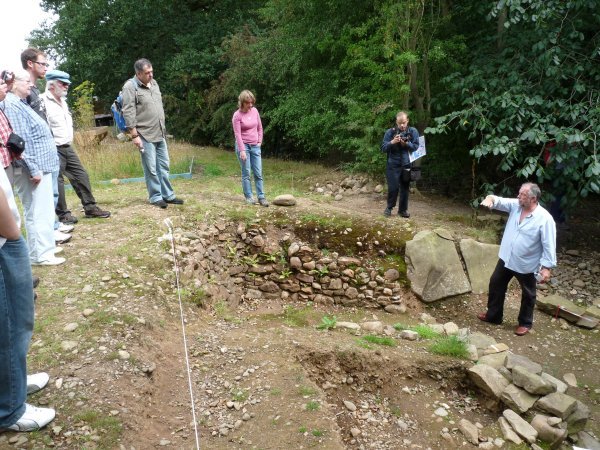

The reconstructed Iron-Age round-house was also quite an achievement. 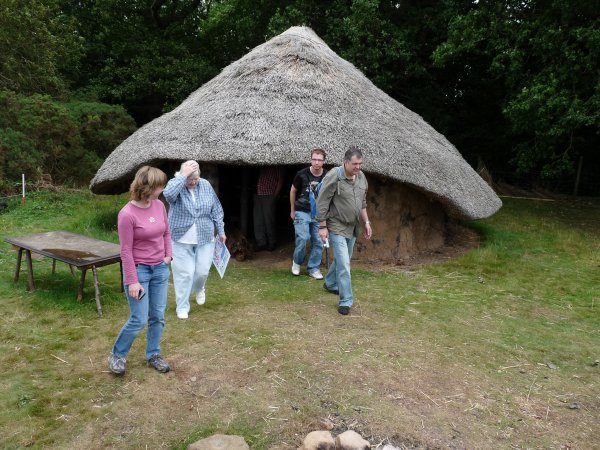

But not sure about the effect it seems to have on the local archaeologists!

Bryn Alyn (or Caer Alyn) is best described as a promontory hill fort with the River Alyn surrounding it on three sides. A huge double bank and ditch system cuts the site off on the fourth (north) side with what appears to be an entrance on the south side leading down to the river.

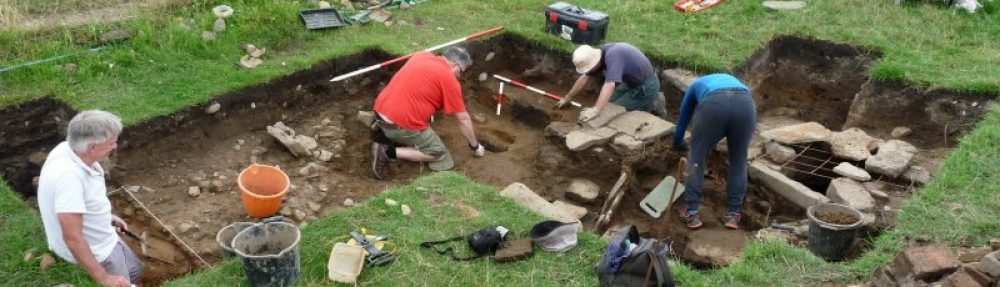
Hill Forts are usually associated with the Iron-Age, however Phil’s geophysics results indicated a circular cross ditch system lying outside the visible bank and ditch system. His excavations have confirmed this – even picked up a huge post hole with a possible second one a few metres away. Phil says the small pieces of pottery coming from the ditch suggest a Bronze Age date would be quite remarkable. 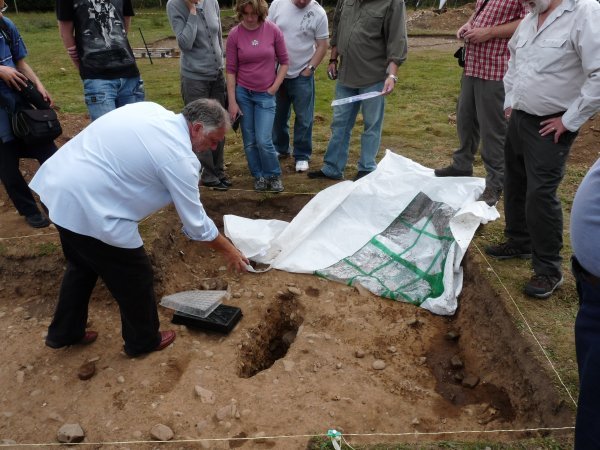

After viewing the Fort, Phil took us round the outside to see the southern entrance (and to find a spot to have our lunch). On the way, we where introduced to the local farmer, Bill, and his fine herd of deer including this one which he called his white hart. 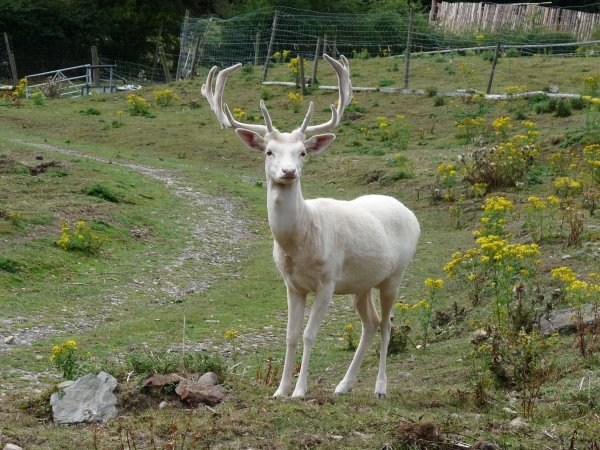

At the southern entrance the Fort is approached by a linear bank and ditch system called Watt’s Dyke. This is thought to be the precursor of Offa’s Dyke which dates from the 8th century AD . 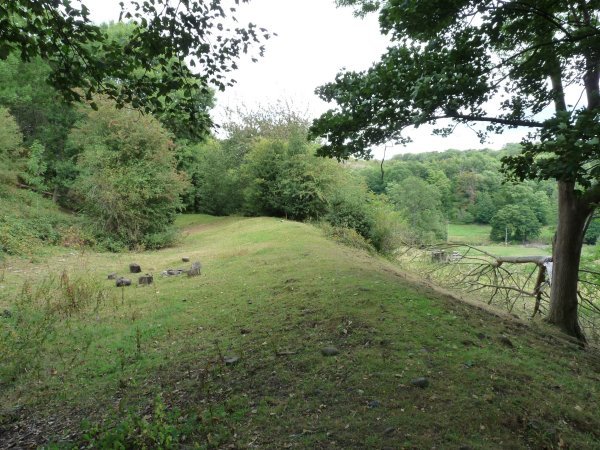 Bryn Alyn is certainly a remarkable site with activity seemingly from all periods of history. Phil’s certainly got his work cut out.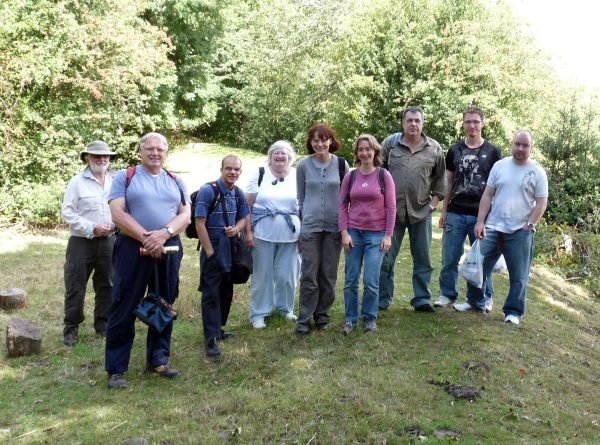
Bryn Alyn is certainly a remarkable site with activity seemingly from all periods of history. Phil’s certainly got his work cut out. 
After a picnic lunch on the ramparts of the Hill Fort, we moved on to Wroxeter Roman City with its huge bathhouse complex. Known as Viroconium, it was the fourth largest in Roman Britain (although most of it is still unexcavated). 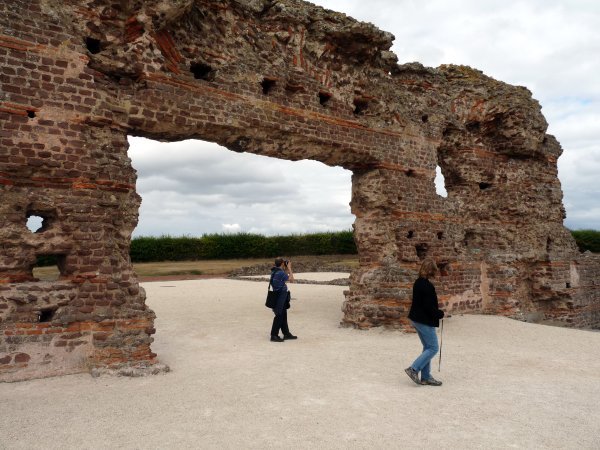 It started life as a legionary fortress but at the turn of the 2nd century AD it was converted into a civilian city – with the forum and bathhouse being added later in the 120’s AD. One theory is that these additions were on the behest of Emperor Hardrian who visited Britain in 122 AD.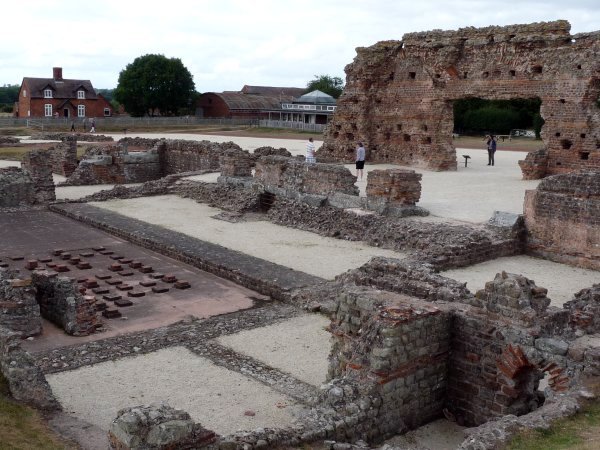
It started life as a legionary fortress but at the turn of the 2nd century AD it was converted into a civilian city – with the forum and bathhouse being added later in the 120’s AD. One theory is that these additions were on the behest of Emperor Hardrian who visited Britain in 122 AD. We finished our trip in nearby Shrewsbury but found the museum to closed for the day so we ended up having a pleasant time in a local hostelry.