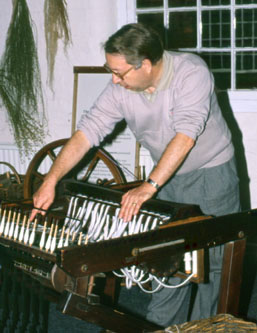
 Spinning Jenny |
The early history of textiles in Wigan is obscure but cotton goods were certainly manufactured here in the 17th century.
This early industry was probably home based. It is likely that local handweavers bought cotton yarn from the Cloth Hall in Wigan and wove it to predetermined specifications. They returned to the Hall to sell their products to mercers.
Wigan weavers worked in cellars located under their cottages. There were many handloom workers in the outlying districts of Wigan but the industry was concentrated in Wigan Lane and Chapel Lane.
The efficiency of the weaving process was greatly increased in 1733 by John Kay's invention of the "flying shuttle". This led to an escalation of technology and the birth of the factory system.
The River Douglas was an ideal source of power for the early water driven machines and by 1818 eight small cotton mills had been established in Wigan, mostly around Wallgate.
Handweavers continued to work in the area until the 1840's but they could not compete with the factory system and their income decreased drastically.
To read about the "handweavers' plight" click here.